Protecting yourself from insurance fraud
March is Fraud Prevention Month. It’s the perfect opportunity to talk about how insurance fraud works—and how to avoid it.
Insurance fraud isn’t something most people think about when they’re shopping for coverage. You’re likely focused on finding the right policy at the right price, not on whether the person on the other end of the line is legitimate. But fraudsters know this—they count on consumers being focused on the transaction, not the person behind it.
The tactics used can vary. Sometimes it’s an unlicensed individual posing as an agent. Other times it’s a policy that looks legitimate but won’t hold up under a claim. In some cases, it’s pressure to buy coverage that doesn’t fit your needs. The common thread is that the fraudster is counting on you to move quickly and not ask too many questions.
Understanding how these schemes work is useful, but what matters more is developing a few simple habits that protect you regardless of the tactic.
Take your time
Fraudulent offers almost always come with a sense of urgency. It could be a limited-time discount, a special rate that expires today, or a warning that this deal won’t be available tomorrow. The goal is to get you to commit before you have time to think.
A legitimate insurance professional doesn’t need to pressure you. They know that buying insurance is an important decision, and they expect you to take time to consider it. If someone is pushing you to decide immediately, that’s worth noticing.
Taking your time means giving yourself at least a day to think about the offer, to compare it with others, and to verify the person you’re dealing with. A genuine opportunity will still be there tomorrow.
What verification actually does
Every province and territory in Canada has a regulatory body that oversees insurance professionals. These bodies maintain public registries where you can confirm whether someone is licensed to sell insurance in their jurisdiction.
A license shows that an individual or business has met specific requirements. Licensed professionals must maintain errors and omissions insurance, are subject to regulatory oversight, and can be held accountable if something goes wrong. When you verify a license, you’re confirming that there’s a structure in place behind the person you’re dealing with.
Read carefully
Insurance policies are contracts, and like any contract, what matters is what’s in writing. Fraudsters often rely on consumers taking their word over the actual document. They might describe coverage that isn’t reflected in the policy, or gloss over exclusions that would leave you unprotected.
Reading a policy doesn’t mean becoming an insurance expert overnight. It means checking that the coverage you discussed matches what’s in the document. If something seems different—a higher deductible than expected or coverage limits that don’t line up—ask about it.
A legitimate agent will expect these questions. They’ll explain anything that’s unclear and make sure you understand what you’re buying. If an agent seems annoyed that you’re reading carefully, that can be a red flag.
Protect your information
Your personal and financial information has value. Fraudsters can use it to file fake claims, open policies in your name, or attempt other forms of identity theft. Be thoughtful about who you share it with.
If someone contacts you unexpectedly asking for sensitive details, that’s unusual. Legitimate insurers and agents won’t pressure you to share personal information over text, unsecured email, or social media. When in doubt, use contact information you’ve verified independently rather than responding to an unsolicited request.
The “too good to be true” test
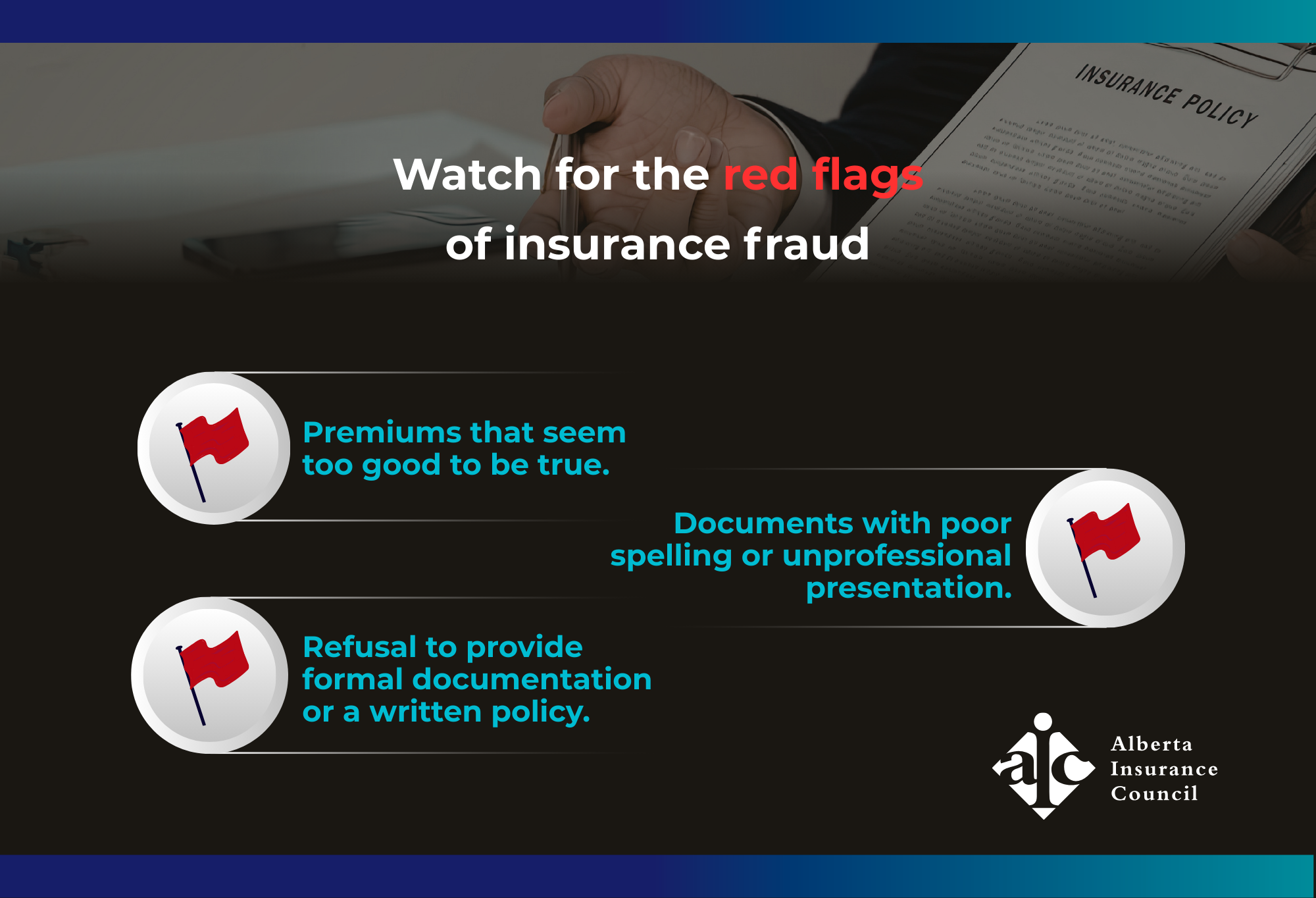
Many fraudulent offers share the characteristic that they seem like an unusually good deal. This can look like a premium that’s dramatically lower than others, or coverage that sounds too comprehensive for the price.
Sometimes, these offers are legitimate, and a company may genuinely have a better rate or a new product. But when something seems too good to be true, it’s worth pausing to find out which situation you’re in. A few minutes of checking can save a lot of trouble later.
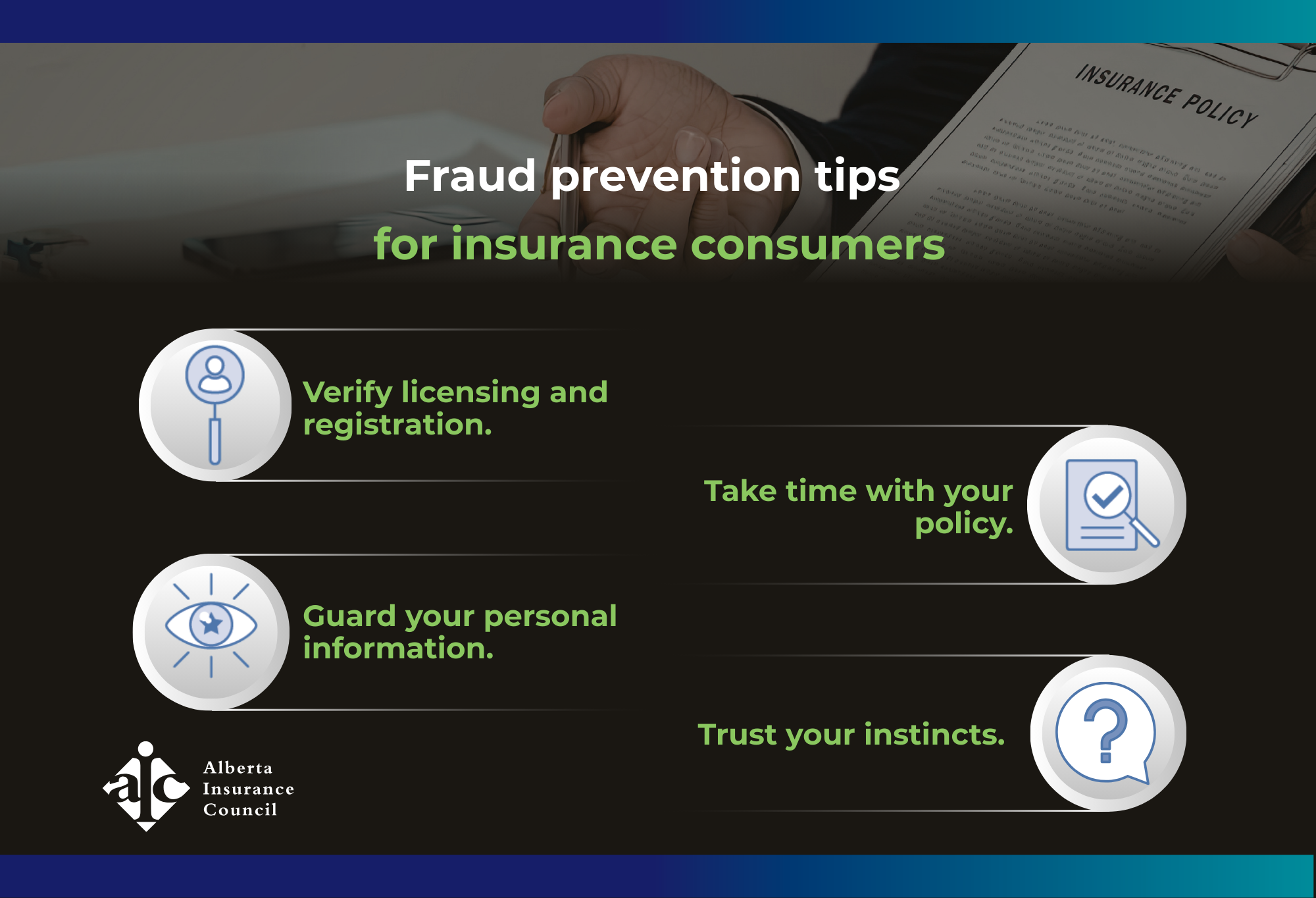
Our fraud prevention infographics break down specific red flags and tips at a glance:
Fraud prevention tips for insurance consumers
Alberta consumers can check an agent’s license here.
For consumers in other provinces, contact the insurance regulator in your jurisdiction to verify licensing.
Do you have a complaint?
As part of its work to protect the public, AIC investigates complaints against insurance agents, brokers & independent adjusters
Make a complaint